

Saturday 03 October 2026
News autopsy: Getting fuel price reporting wrong
I'd like to give a case study of single article on the BBC News site that illustrates why people are walking from the main news providers.
This is the article: "I moved my shop 20 miles because I couldn't afford £300 a week on fuel"
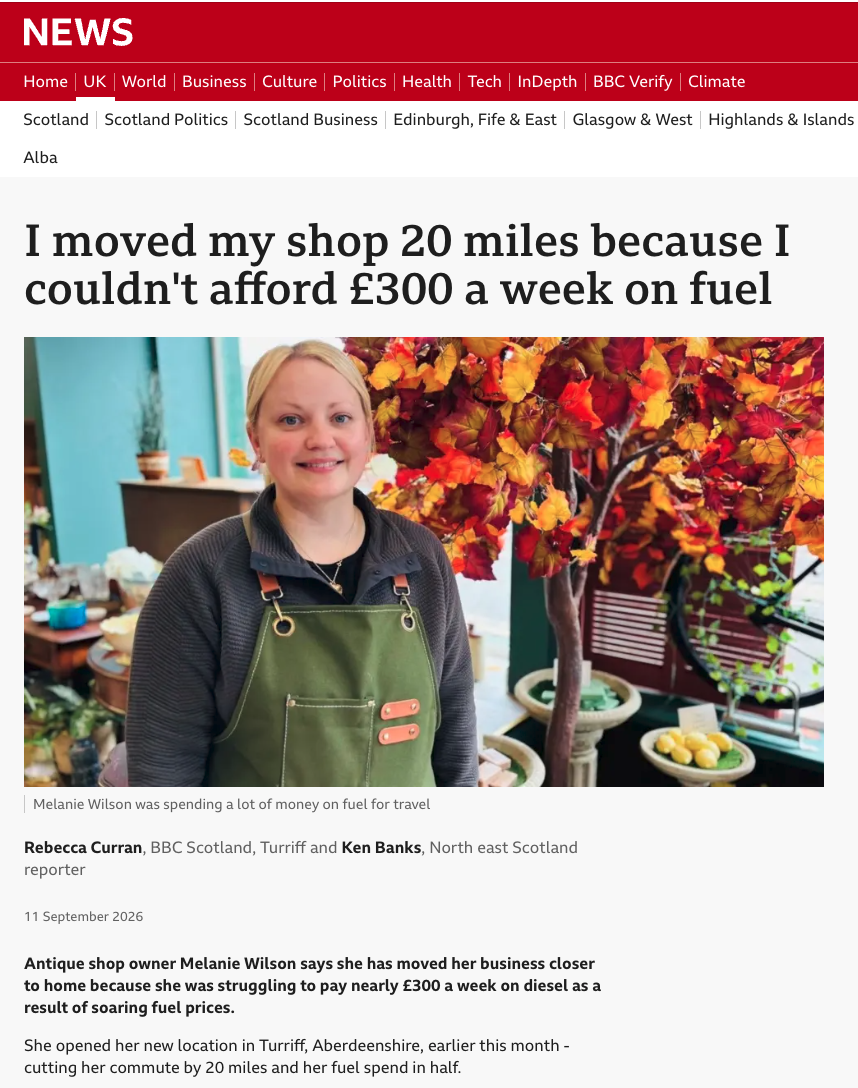
Melanie Wilson moved her shop because she was spending £300/week on diesel but now she is only spending £150/week.
Let's do the maths. Her new shop is in Turriff which is 12 miles from Banff. Seven return trips would be 168 miles. £150 divided by 168 is about 90p per mile. That seems a bit steep. It would be about 2.2 miles per litre at £2.00 or 10 miles a gallon. A Hummer does 24mpg. Normal diesel cars will easily do 40mpg on the open road like that between Banff and Turiff. The numbers are out by a factor of four.
How far would a diesel car go on the £300 in the headline? At £2/litre (£9.08/gallon) £300 would buy you 33 gallons. At 40mpg that would get you 1,320 miles. That's Banff to London and back.
If she cut her commute by twenty miles (forty miles return) as it says in the article that is a gallon of diesel a day which is £64/week . Not £150/week. The headline is out by a factor of two. Of course she could be driving home for lunch seven days a week and doing double the mileage and spending four hours a day in the car. The actual duration of the commute would then be more of an issue than the cost of fuel. None of it makes sense.
There are a series of other profiles in the articles of people struggling to pay fuel costs but there are no figures that could be taken apart.
The article has a byline from two journalists and was presumably read by a sub who wrote the headline. None of these people noticed how wrong these numbers were but a very large percentage of readers will notice because they know about this subject.
The fact that I've got my calculator out and dissected this article seems trivial if not crazy. It is just a filler piece surely. But if they can't get this right how can we trust reporting on bigger economics stories like the budget?
Journalism is supposed to be keeping a record of the truth of what is going on. The first draft of history. The justification for having professional journalists is as an antidote to a rant on a blog like this, a series of Facebook posts or corporate propaganda. This particular news story clearly starts from the premise: get some vox pops about how bad people feel about rising fuel costs. That is not news gathering it is content creation. If BBC News are merely doing content creation then their raison d'être no longer exists. Which is a great loss.
This is a graph of the UK average pump prices over the last twenty years from the RAC Foundation.
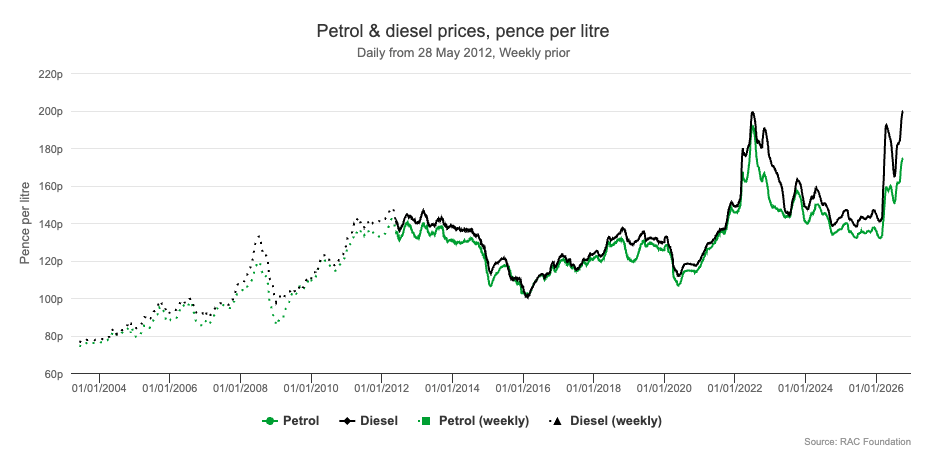
It looks like they have rocketed up in the past year as they did after COVID. Oh for the halcyon days of the 2010s where diesel hovered around £1.30/l.
But wait! Hasn't everything gone up in price? What would £1.30 in 2016 be worth in todays money? The Bank of England has a handy calculator that will tell us.
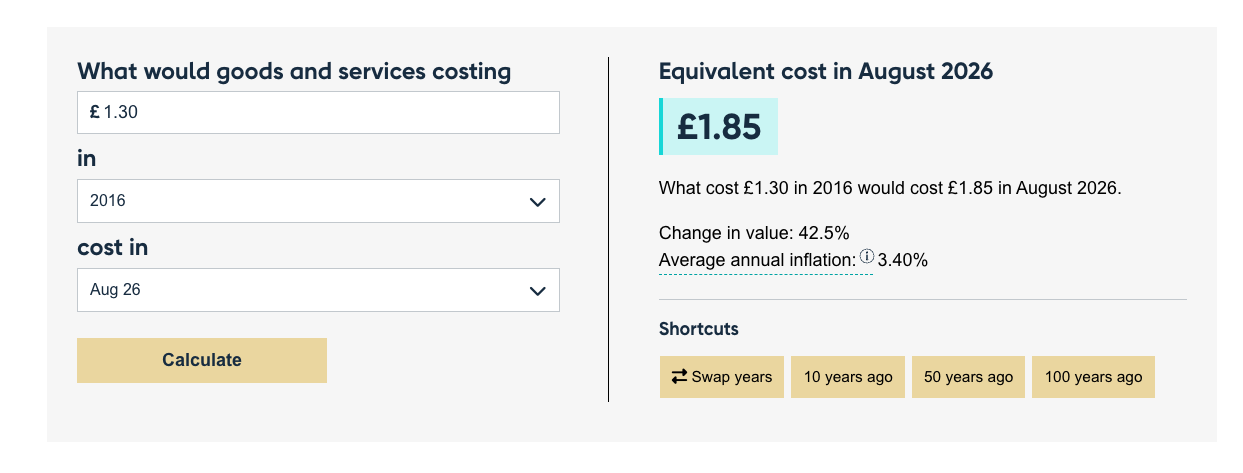
The inflation corrected cost of a litre of diesel would be about £1.85. As I type in October 2026 it has just hit £2.00 which is 7% over what one would expect the pump price to be anyhow. The real issue is that for the whole of 2025 diesel cost around £1.40 to £1.50 per litre which was, inflation corrected, 40p (25%) under priced! Although the peak price is overshooting it is more like a correction. A 7% rise in fuel prices within a month might be manageable for a transport firm but a 30% rise is crippling. This is the real story.
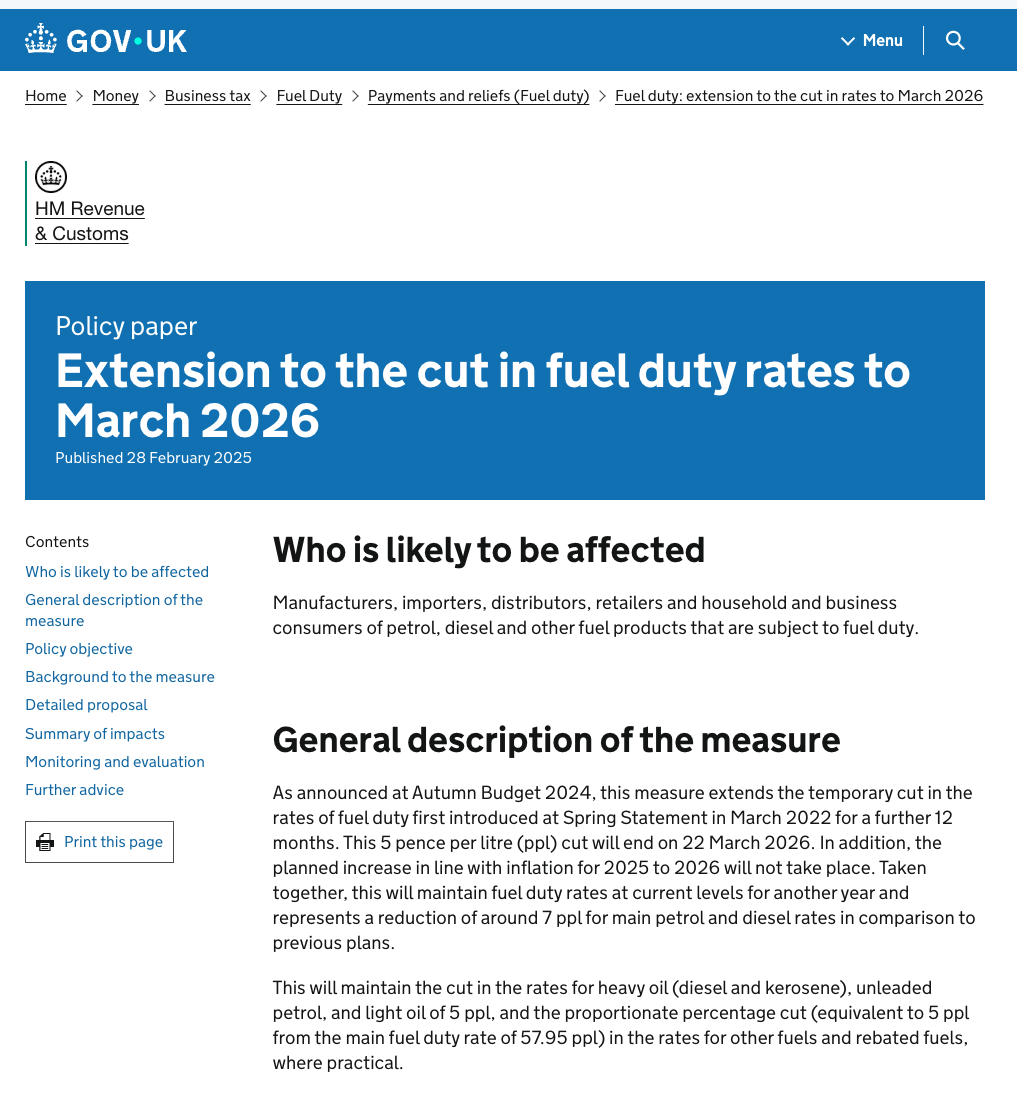
Back at the start of 2025, when fuel was under priced, the government continued the policy of reduced duty thus adding to perception that fuel is cheap and encouraging people to rely on it at an unrealistic price. This policy was renewed in 2026. If they hadn't done this then fuel last year would have been 5p/l (3%) more expensive and the government would have raised lots of money for schools and hospitals etc. They would now be able to cut that duty whilst we are (hopefully) at the peak of the price spike thus flattening out the cost of fuel and making everyone's lives more predictable. It could be argued the duty should have been even higher last year in order to bring long term stability to fuel prices. But that would be politically unpopular. The Labour government had just been elected with a massive majority and could have taken that step. Instead they made the incredibly unpopular cut to pensioners' winter heating allowance. An astute politician could have used that as a foil. We need to increase road duty or let old people freeze! But they didn't.
How might the BBC have reported better? Well the journalists could have got the figures right. They could have asked some probing questions about what people expected fuel prices to be like and how they planned for the future last year. Everyone always thinkings fuel is expensive so the questions asked are not enlightening. The suffering of the people in the article is linked to the disparity between income and living costs not merely the pump price of fuel. Put simply the article isn't news it is content slop. It was no doubt written by humans but may as well have been generated.